
How to Find a Roof Leak in a House
Find a roof leak fast with a step-by-step method for reading ceiling stains and checking common spots. Learn how to trace the source safely in your attic.
Last Updated: October 30, 2026
Quick Summary
To find a roof leak in a house, start inside by reading ceiling stains and running a two-person water test: one person sprays the roof with a garden hose in sections while a spotter in the attic watches for moisture. Check flashing around chimneys, skylights, valleys, and vents first, since flashing causes more leaks than any other roof component.
- Water follows framing, so a ceiling stain is usually not directly below the hole.
- Brown rings mean an old, slow leak; fresh dark spots mean active water.
- Stay off the roof if it is wet, icy, steeply pitched, sagging, or storm damaged.
- Ground-level checks with binoculars can reveal curled shingles, lifted flashing, and granule piles.
- Tarp the leak area and photograph everything for your insurance claim while you wait for a pro.
Table of Contents
- Before You Start: Tools and Prep for Tracking a Roof Leak
- How to Find a Roof Leak From Inside the House
- Common Roof Leak Locations to Check First
- How to Inspect a Roof for Leaks Safely
- Temporary Roof Leak Repair While You Wait for a Pro
- Mistakes That Make a Roof Leak Worse
- Book a Free Leak Inspection With Instant Online Pricing
- Frequently Asked Questions
Before You Start: Tools and Prep for Tracking a Roof Leak
Water damage rarely stays where it starts. A small leak can rot decking and soak insulation for weeks before you notice it. In fact, RubyHome's roofing statistics report that 33% of homeowners replaced their roofs because of leaking, and another 33% cited storm damage. Finding the source early is the difference between a cheap fix and a full replacement.
At Roof Repair Company, we can tell you the search almost always starts indoors. Before you head up, gather a few basics:
- A bright flashlight and a ladder rated for indoor use
- A notebook and phone camera for documenting stains
- Chalk or painter's tape to mark water lines
- A moisture meter, if you have one
- Drop cloths and buckets for active drips
Watch out: Never step into an attic in the dark without a stable surface to stand on. One misstep through drywall costs more than most repairs.
How to Find a Roof Leak From Inside the House
Start inside, not on the roof. This is the fastest and safest way to find a roof leak in a house, and it costs nothing but time. Water follows framing, so the stain on your ceiling is usually not directly below the hole.
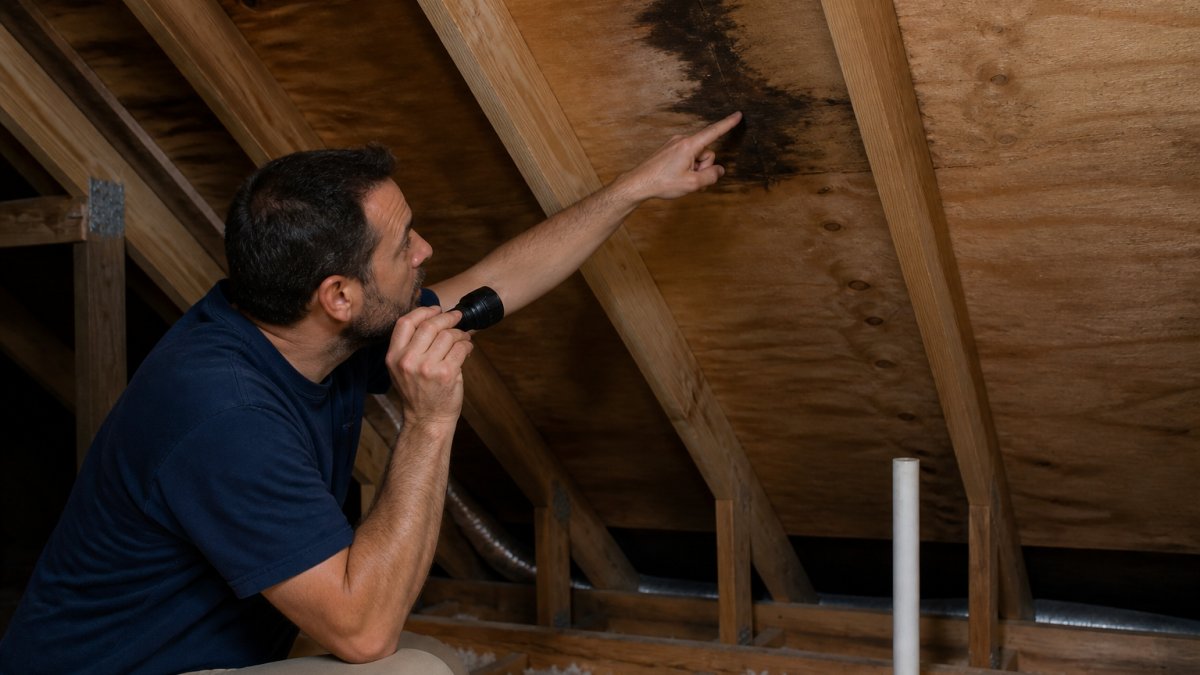 Homeowner using a flashlight to inspect a dark water stain on attic roof decking to locate a roof leak
Read the Ceiling Stain Before You Touch the Attic
A ceiling stain is discolored drywall or plaster caused by water soaking through from above. Its shape tells a story. Brown rings mean an old, slow leak. Fresh dark spots mean active water. Bubbling paint means water is trapped behind it.
Snap a photo and measure the stain. Then check it again after the next rain. If it grows, the leak is live.
The Water Test: Trace the Drip Back to Its Entry Point
The water test works best with two people. One stays in the attic with a flashlight. The other sprays a garden hose on the roof, starting low and moving up in sections. The spotter watches for moisture and calls out where it appears. Persistent dampness might also suggest that the underlying material has begun to deteriorate, which often makes it necessary to identify roof shingle streaks that signal more extensive damage.
Work in short bursts. Soak one area, wait, and check. This method pinpoints the entry point without tearing anything apart.
Common Roof Leak Locations to Check First
Flashing causes more leaks than any other roof component. Flashing is the metal stripping that seals joints around chimneys, vents, and valleys. When it lifts or rusts, water slides right under it.
Check these spots first:
- Chimney and skylight flashing
- Roof valleys where two planes meet
- Pipe boots and vent seals
- Loose or missing shingles
- Gutter seams and drip edges
- Nail pops and exposed fasteners
Check these spots first, since flashing causes more leaks than any other roof component.
| Location | What to look for |
|---|---|
| Chimney and skylight flashing | Lifted or rusted metal stripping |
| Roof valleys | Where two planes meet |
| Pipe boots and vent seals | Worn or missing seals |
| Shingles | Loose or missing shingles |
| Gutter seams and drip edges | Open seams and edge wear |
| Nail pops and exposed fasteners | Fasteners poking through |
How to Inspect a Roof for Leaks Safely
Safety comes before speed. If you can spot the problem from the ground, stay there.
Ground-Level Checks That Don't Require Climbing
Walk the perimeter with binoculars. Look for:
- Curled, cracked, or missing shingles
- Rusted or lifted flashing
- Granules piled at downspouts
- Sagging rooflines
- Stains on soffits or fascia
These clues often point to the leak without a single step on the roof.
When to Stay Off the Roof Entirely
Stay off the roof if it is wet, icy, or steeply pitched. Skip it if you see sagging, soft spots, or storm damage. Age matters too: an old roof can fail under a person's weight.
Watch out: Walking a damaged roof can turn a repair into a replacement. When in doubt, call a pro.
Temporary Roof Leak Repair While You Wait for a Pro
Stop the water, then stop the damage. For in-depth roof repair guides written by the crews doing the work, see our repair resources. Temporary fixes buy you time, not a permanent solution.
Quick temporary fixes:
- Tarp the leak area and secure it with weighted boards
- Apply roofing cement under a lifted shingle
- Seal small gaps with flashing tape
- Move valuables and buckets under drips
- Photograph everything for your insurance claim
Mistakes That Make a Roof Leak Worse
The worst mistake is guessing. If you are weighing repair against replacement, our in-depth roof replacement guides help you avoid costly missteps. Homeowners who patch the wrong spot waste money and let water spread. Another common error is climbing a wet roof, which risks a fall.
Other costly missteps:
- Sealing over wet wood, which traps moisture and rots it faster
- Ignoring small stains until mold sets in
- Skipping photos before repairs, which weakens insurance claims
- Letting a "friend with a ladder" attempt structural fixes
Book a Free Leak Inspection With Instant Online Pricing
Finding the leak is step one. Fixing it right is step two. Roof Repair Company uses satellite-based roof measurement to give you instant online pricing in 60 seconds, with no salesman and no pressure. We are GAF Master Elite certified, registered, certified, and insured, and 1,122 reviews back our workmanship.
We also offer free storm and hail damage inspections, insurance claim assistance, and on-site adjuster meetings.
Frequently Asked Questions
How do you find the source of a roof leak?
Start inside the attic on a dry day and look for water stains, dark streaks, or daylight along the roof deck. Then have someone run a hose on the roof, starting low and moving upward, while you watch for drips. Mark where water first appears. Because water travels along rafters and sheathing, the entry point is often several feet uphill from the ceiling stain, so trace the wet path back to the highest point.
Where do roof leaks most commonly start?
Most roof leaks begin at roof penetrations and transitions: chimneys, vent pipes, skylights, valleys where two roof planes meet, and the flashing along walls and eaves. Missing or lifted shingles and clogged gutters also cause problems. When you check common roof leak locations, look at these junctions first. In Texas, hail and wind damage around flashing and ridge caps is a frequent culprit after spring storms.
Can a roof leak show up far from where water enters?
Yes. Water follows gravity and the slope of framing, so it can enter at a flashing gap near the ridge and drip onto a ceiling 10 feet away. That is why chasing the ceiling stain alone often fails. Always trace the wet trail in the attic uphill to its highest point. If you cannot find the entry point, a professional inspection with moisture readings and satellite measurements is the faster route.
What should you do first when you find a roof leak?
Contain the water, then document it. Place a bucket under the drip, move furniture and electronics, and if the ceiling bulges, puncture it with a small hole to release trapped water safely. Photograph the stain and any damaged belongings for an insurance claim. Then apply temporary roof leak repair, such as a tarp or sealant at the suspected entry, and book a professional inspection before the next storm.
A leak you cannot trace is a leak that keeps costing you. Let our team handle the inspection, the paperwork, and the repair so you can stop worrying about the next rain. Get started with Roof Repair Company and book your free leak inspection today.
<a href="https://roof.day">Free Inspection</a>
Need Professional Roof Replacement?
Roof Repair Company provides expert roof replacement services throughout Katy, TX. Contact us today for a free inspection and estimate.